


 by
by 
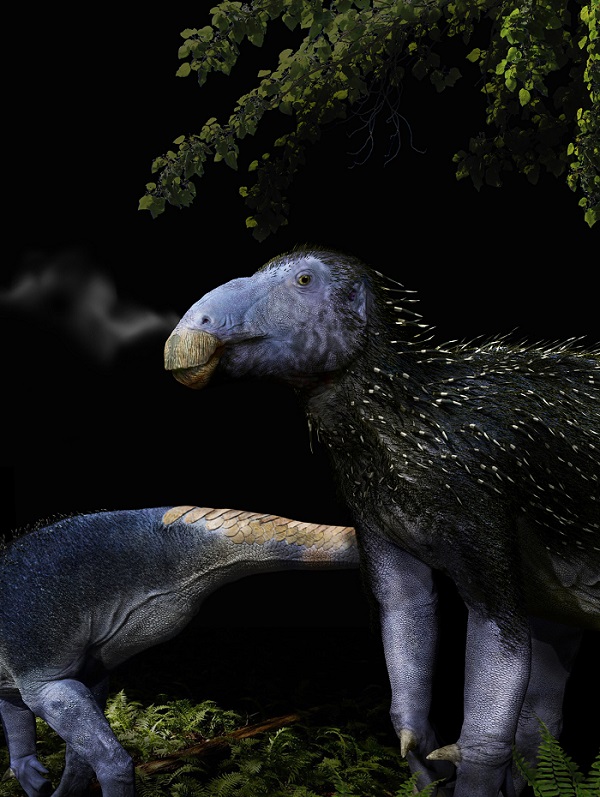
2026 is kicking off with a bit of a bang as this week saw the release of a paper describing a new species of iguanodontian that also happened to sport some heretofore unknown integument. This new integumentary material is a series of “spikes” that surrounded the main body. These spikes are small (most were ~2–3 mm) and are comprised of epidermal material. Given their small size and numerous presence, this new integument has once again fueled speculation about feathers in ornithischians within the paleophile community. However, a read of the paper makes it clear that we are not dealing with protofeathers.
So, what is it? Read on to find out.
The paper
Huang, J., Wenhow, W., Mao, L., Bertozzo, F., Dhouailly, D., Robin, N., Pittman, M., Kaye, T.G., Manucci, F., He, X., Wang, X., Godefroit, P. 2026. Cellular-level preservation of cutaneous spikes in an Early Cretaceous iguanodontian dinosaur. Nature Ecology and Evolution
At the time of writing the paper is not open access, but the supplementary material is. This is usually a good thing as the overly restrictive page limit of Nature papers (and their myriad subsidiaries) always push the real science into the supplementary files anyway. Surprisingly, this was not the case for this paper. In fact, I would say it is almost the opposite. The supplementary material covers the alpha taxonomy of Haolong dongi in great detail, but it says little about the integument. So, if you are really into alpha taxonomy then the supplement is where to go. The only part of the supplementary material that tackles the integument is a series of energy dispersive spectrographs showing the elemental makeup of the spikes and the scutate scales.
The animal
Haolong dongi is represented by a single, near complete skeleton of a small iguanodontian. The skeleton is approximately 2.45 meters in length and is believed to be from a juvenile animal based on the lack of fusion between the vertebral centra and their neural arches (which may be true or may not. See Hone et al. 2016 for a review on dinosaur “adulthood”). As dinosaurs go, this was a small animal that was probably no more than a hundred kilograms in mass. The specimen comes from the Yixian Formation and as is typical for Yixian fossils, the material is spread out over several broken “plates” of rock (their Figure 1A).
The integument
The big star of the show, and the origin of the name Haolong (Spiny dragon) is the integument. The tail is overlain by several largish (5.2 cm), overlapping scutate scales. These scales look quite different from the non-imbricating scales typically associated with ornithopods scale impressions (Bell 2014). In fact, the only other dinosaur with comparable overlapping tail scales is the Kulinda taxon (Godefroit et al. 2014). Similarly to that taxon, scalation pattern changes as one moves more rostrally from the tail. The overlapping scutate scales give way to a series of non-imbricating basement scales that are more typical of hadrosaurs. It’s here between these basement scales that a new feature is introduced, epidermal spikes.
The spikes are small structures with most spikes not exceeding 2–3 mm in length and about 0.1 mm in maximum width. There are a handful of larger spikes (5–7 mm long) and there may be a few “really long” spikes that were 44.2 mm long and 7.8 mm wide at their base. I say maybe because the authors state that these “much larger” spikes are poorly preserved and are represented as a dotted line in Extended figure 4B. This inferred length should be taken with a high dose of skepticism. Regardless, all of these spikes are a far cry from the 60+ cm long spikes of stegosaurs, ceratopsians, and ankylosaurs. If I had reviewed this I would have encouraged the authors to use the word spines instead of spikes, as the former is more consistently associated with sharp things of dermal origin (e.g., hedgehogs spines).
The analysis
Past experience has taught me that this is where a lot of these “novel integument” papers fail. Typically, authors will do the minimum descriptive work in favour of getting a headline-capturing paper out (e.g., Sinornithosaurus millenii description [Xu et al. 2001]; Psittacosaurus tail “feathers” [Mayr et al. 2002]). However, the authors of this paper went the extra mile, going beyond interpretive drawings and UV fluorescence by including histological samples of the scutate scales and the spikes. These samples were looked at using both light microscopy and energy dispersion spectroscopy (EDS), providing both a look at the microstructure of the material and its elemental makeup. This level of rigour is great because it removes a lot of the ambiguity that often plagues these new finds.
In the case of H. dongi, an analysis of the histological makeup found that these epidermal spikes were comprised of the same material as the scutate scales. In other words, these spikes are a type of epidermal scale.
Virtual sections from tomographic analysis suggest that the apex and the marginal layer (‘cortex’) of the spikes are made of a similarly dense material as the marginal layer of the tuberculate scales.
Huang et al. go into more detail on the histological makeup here that is of questionable validity. As the title suggests, there is “cellular-level” preservation present. However, looking at the histological sections pretty clearly shows permineralization present in the integument. The original material is not present here. Instead, we have mineral replacement. So statements about Malpighian layers and keratinocytes remain debatable and dubious. The authors argue that authigenic replacement of organic material with minerals occur at an ultrastructural level, but a cursory glimpse of the histological slice doesn’t even support a microscopic level replacement (their Figure 4 indicates a “shadow” of the original material with lots of mineral growth in its place).
Similarly, the authors state that the spikes are hollow structures and cite Figure 3H, which features a serial cross section through the spike. Both the image and the description in the paper (medullary region becomes more porous towards the base) conflict with later statements about being hollow. In fact, less than halfway up from the base of the spike in Figure 3H one can see a completely solid structure.
So, I disagree with the cellular description as well as the statement about the spikes being hollow, and I cite the data from the authors paper as to why. That said, I do think the “they’re just scales” argument still holds here as the material density remains the same between the scales and the spikes. Further, EDS data from the scutate scales and the spikes look near identical to each other (see Extended Table 1), which suggests that permineralization was replacing the same original material.
Given that, I found it weird that the authors did not come to the same conclusion and argued that these spikes couldn’t be scales because…they weren’t big enough.
Huang et al. state that these spikes differ from the much larger spines of green iguanas (Iguana iguana) as the latter arise from a larger base. Now, given that iguana spines are larger than the “spikes” in H. dongi, this shouldn’t be surprising. Maybe they meant the ratio was different. Regardless, it seems an overly strict criterion here (if it doesn’t look exactly like a green iguana’s spine then it can’t be a scale). The authors cite Chang et al. 2009 in their reasoning. Those authors were reviewing the current knowledge of the scale-to-feather models and they used a histological section through the dorsal frill of a green iguana in their example. The problem here is that there are so many more scale types out there than just the dorsal frill of iguanas. For instance, thinner and more “spike-like” scales can be seen in ciliated geckos (Rhacodactylus).
As a side note, I will add this quote from Chang et al. 2009:
In some frill-type scales, they form follicle-like structures… It will be interesting to study the cell density and proliferation in these follicle-like structures to evaluate the specific kinetics of cell renewal and growth, and compare them with follicular patterns in both hairs and feathers.
Returning to Huang et al. and H. dongi, the authors ultimately argue that the spikes are neither protofeathers nor scales, but rather a brand-new integumentary structure more akin to the “horns” of horned screamers ( Anhima cornuta ,Stettenheim 2000; Mayr et al. 2016) or the “beards” of turkeys (Meleagris gallopavo, Sawyer et al. 2003). It’s a bold statement to make given the close chemical and histological association to scales, and I suspect that future analyses may push these structures into “scaly spines” territory.
The paleo-art interpretation
The reconstruction of H. dongi by Fabio Manucci was commissioned for the press release of the paper and thus has become the template for all future H. dongi paleo-art. In it we see a fairly fuzzy ornithopod, with distinct spines jutting out from around the torso region. This interpretation seems strange given what is described in the paper about the remarkably small size of these spikes. The longest spikes associated with the specimen were only 4.4 cm in length. These tiny distances wouldn’t really be all that visible on an animal the size of H. dongi. Instead, the torso region may have had a jagged look, but one wouldn’t be able to make out more than that. For comparison, below is an image of a Western Fence Lizard (Sceloporus magister) that also has a bunch of little spines covering its body. Can you see them very well here?
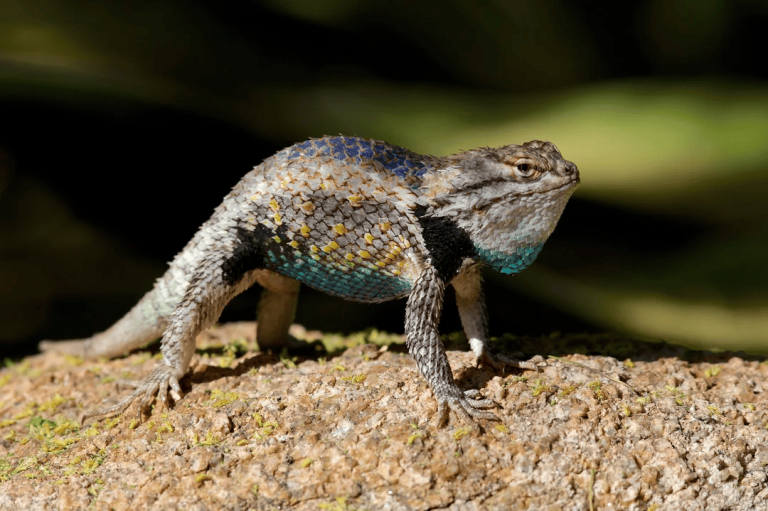
For reference, Haolong dongi was 245 cm in length and had “spikes” on its body that were between 0.1–4.4 cm in length, which is a smaller ratio than what we are seeing in the S. magister image above.
In other words, the reconstruction made the spikes too long. The real animal would have looked more like S. magister in that there would be signs that it was spiky, but no one would mistake it for a porcupine or hedgehog.
Dial back on the enfluffening
Finally, we come to the response from the paleophile community. Once again, I am seeing many of the more online segments readily embrace this new find as an excuse to pop feathers on all dinosaurs again. To that, I would urge folks to please read the paper. The authors themselves state that these structures should not be viewed as being in any way related to protofeathers:
These spikes differ structurally from known protofeathers in non-avian dinosaurs and scaly spines in extant squamates, suggesting a distinct evolutionary origin.
Therefore, the hollow spikes in Haolong likely do not represent an early stage in feather evolution.
The long bristle-like structures on the proximal part of tail of Psittacosaurus were also interpreted as cylindrical and seemingly tubular epidermal structures; so we support the hypothesis that those bristles in Psittacosaurus are not directly related to feather evolution either.
I will say that it is nice to see greater restraint at play here (though I suspect reviewer feedback was the driving force). Previous papers on dinosaur filament or filament-like integument have always rushed to label them as a flavour of feather (see, for example Godefroit’s previous work on the Kulinda taxon). Now, after the pioneering work by Phil Bell and colleagues on dinosaur scales (Bell 2012, 2014; Bell and Hendrickx 2020; Hendrickx and Bell 2021; Bell et al. 2017, 2022), coupled with more stringent tests for homology by Paul Barrett and others (Barrett et al. 2015; Campione et al. 2020), the bar for what is a feather has been significantly raised.
Summary
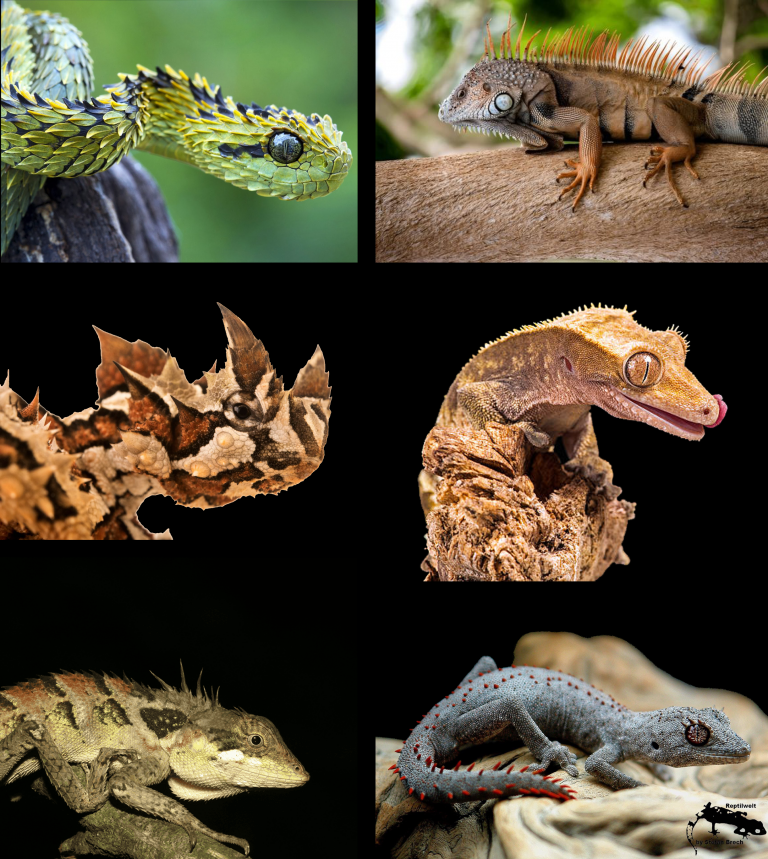
Hualong dongi provides a new addition to ornithopod integumentary diversity. The preserved structures indicate a spinier animal than expected, which may have helped reduce predation attempts when it was a juvenile or may have played a role in social signaling (all speculative at this point). Although this new fossil has increased our range of ornithopod integument diversity, it should not be used as evidence for protofeathers or other filaments in ornithischians. Instead, we are seeing just how weird and diverse scales were in Dinosauria, which frankly is great to see. The paleo-art community seems to rarely acknowledge the scaly side of Dinosauria and has been fine with tossing in a generic scaly coat for any dinosaur that doesn’t sport filaments. Now, with this new paper by Haung et al. coupled with the recent paper on sauropod scalation (Gallagher et al. 2025), paleo-artists are being forced to drop this one size fits all approach to dinosaur scales. I strongly recommend that paleo-artists look at extant squamates for examples of just how out there scales can be. It’s likely that dinosaurs had a similarly large toolbox to work with.
~Jura
References
Barrett, P.M., Evans, D.C. and Campione, N.E., 2015. Evolution of dinosaur epidermal structures. Biology Letters, 11(6):20150229.
Bell, P.R., 2014. A review of hadrosaurid skin impressions. in Eberth, DA, Evans DC. (eds), Hadrosaurs. Bloomington ID, Indiana University Press. pp.572-590.
Bell, P.R., 2012. Standardized terminology and potential taxonomic utility for hadrosaurid skin impressions: a case study for Saurolophus from Canada and Mongolia. PLoS One, 7(2), p.e31295.
Godefroit, P., Sinitsa, S.M., Dhouailly, D., Bolotsky, Y.L., Sizov, A.V., McNamara, M.E., Benton, M.J. and Spagna, P., 2014. A Jurassic ornithischian dinosaur from Siberia with both feathers and scales. Science, 345(6195), pp.451-455.
Hone, D.W., Farke, A.A. and Wedel, M.J., 2016. Ontogeny and the fossil record: what, if anything, is an adult dinosaur?. Biology letters, 12(2), p.20150947.
Sawyer, R.H., Washington, L.D., Salvatore, B.A., Glenn, T.C., Knapp, L.W. 2003. Origin of Archosaurian Integumentary Appendages: The Bristles of the Wild Turkey Beard Express Feather-Type B Keratins. J.Exp.Zool.(Mol.Dev.Evol) Vol.297B:27-34
Xu, X., Wang, X.L. and Wu, X.C., 1999. A dromaeosaurid dinosaur with a filamentous integument from the Yixian Formation of China. Nature, 401(6750), pp.262-266.
by